
Bullhead City Address Eras
A backward address search needs an era map before it needs a name. The Assessor supplies the present parcel anchor, while the Recorder’s online index supports the modern deed chain. Older land records require an office inquiry. Household sources are less exact: no official shelf list verified specific Bullhead City reverse-directory years, and public federal census schedules end with 1950 as of 2026.
| Source | Years it covers | Where held | What it shows |
|---|---|---|---|
| Recorder online index | 1988 to present | Mohave Eagle Self-Service | Recorded parties, instruments, and land references |
| Older deed books and indexes | Before 1988; exact series varies | Recorder counter, microfilm, or archives inquiry | Earlier ownership instruments |
| Assessor roll | Current; history varies by parcel | Assessor portal or counter | Owner, situs, mailing, APN, legal, improvements |
| Local reverse or phone books | Exact Bullhead years unverified | Bullhead Branch or State Archives inquiry | Published occupant clues by address |
| Federal census | Public through 1950 | NARA, FamilySearch, or library access | Enumerated households in historical geography |
| Permits, probate, obituaries | Record-specific | City, court, newspaper, or library | Building events, heirs, death, and address leads |
Start with deeds for ownership. Add occupant evidence only when a directory or census record actually names the address or matched household. This distinction is especially important in a city with seasonal parcels, distant tax-mail destinations, and entity ownership.
Anchor Bullhead City Past Residents
Enter the current situs address in the Mohave County Assessor parcel search. Record the APN, current owner, owner mailing address, subdivision, lot, block, legal description, improvement facts, and any transfer reference. Situs means the physical site. Mailing means the place selected for tax notices. Neither label alone establishes who slept at the property.
The legal description is the durable key. Street numbers can be missing or inconsistent, and postal labels can change. Bullhead City incorporated in 1984 after communities along the river had already developed. Old records may say Riviera, Holiday Shores, Davis Dam, a subdivision, or simply Mohave County. Keep the APN and land description fixed while trying those older place names.
- APN
- The county parcel identifier used to connect assessment and map records.
- Legal description
- The formal land reference, often based on subdivision, lot, block, or survey language.
- Situs
- The physical property address, which may differ from the owner’s mailing address.
- Chain of title
- The linked sequence of recorded transfers affecting the same land.
Note: No official source established a citywide Bullhead street-renumbering year, so bridge questionable addresses with plats and legal descriptions.
Walk Mohave Deeds Backward
Mohave County’s web index is organized around grantors and grantees. A grantor transfers an interest; a grantee receives it. Begin with the current assessed owner and an approximate transfer date. Search the name last-name-first with no comma, then confirm the correct deed through the APN, legal description, document number, and related land details.
- Capture the current Assessor owner, APN, legal description, and any transfer date or reference.
- Find the deed in which the current owner appears as grantee, and record the grantor, recording date, document number, and instrument type.
- Search that grantor as a grantee in an earlier date span. Match land facts, not surname alone.
- Repeat the seller-to-buyer link until the verified chain reaches the online cutoff.
- Carry the last book, page, parties, and legal description to Recorder staff for earlier books or microfilm.
The Mohave Recorder index disclaimer states the public grantor-grantee coverage and its search limits.
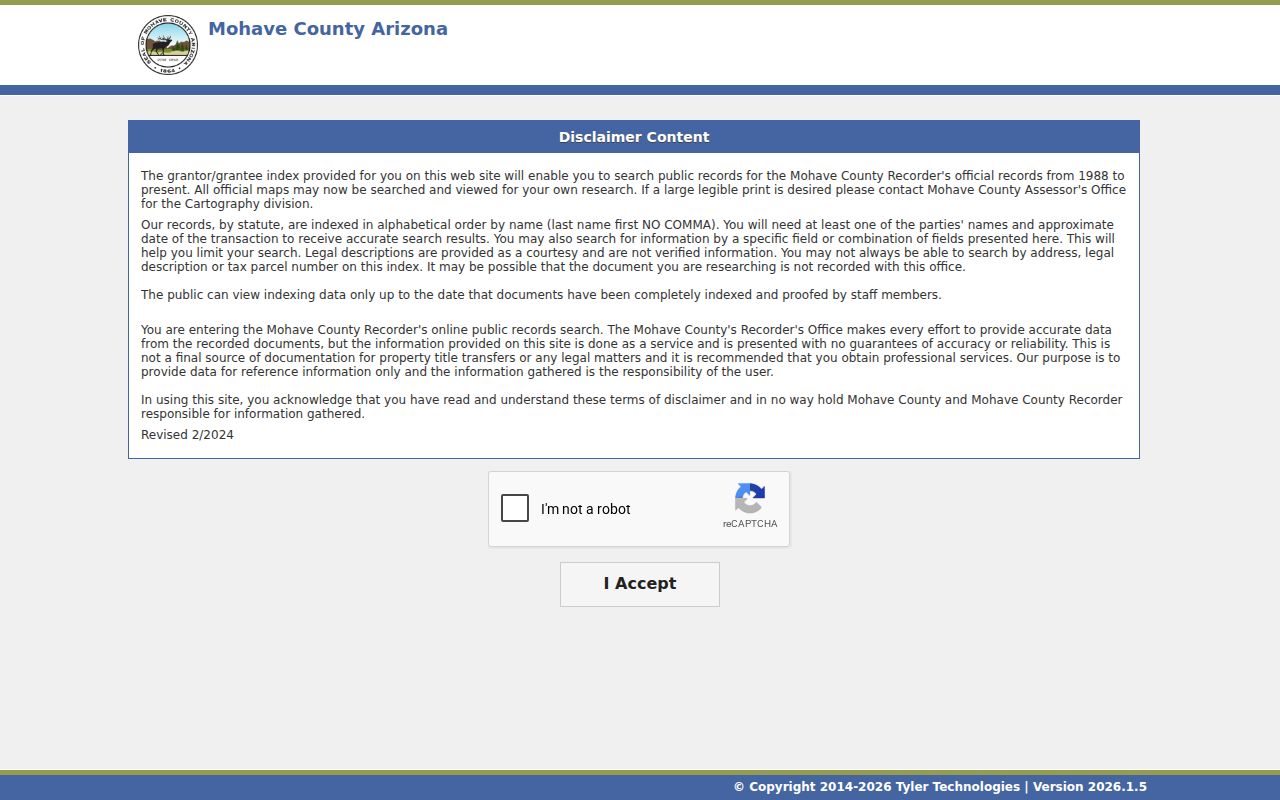
The captured page reinforces a core rule: address and parcel fields may not be indexed consistently, so the previous residents trail should begin in the Assessor and enter Eagle through verified party names.
Bullhead City History Before 1988
The end of the web index is not the end of the deed chain. The Recorder’s Bullhead office at 1130 Hancock Road is open Monday through Thursday from 8 a.m. to 5 p.m. and closes from noon to 1 p.m. It can help with local questions and current copies. The main Kingman office at 700 West Beale Street is open weekdays and should be asked about pre-1988 indexes, deed books, microfilm, and certified copies. The Recorder’s Micrographics Division preserves and images county material.
Bring a compact research packet: the final verified online deed, document number, book and page, exact party spellings, APN, complete legal description, and the target date range. Recorder staff can retrieve records but cannot offer title advice. Earlier county materials may also appear in Arizona State Archives or the FamilySearch Mohave County catalog, with some images limited to an account, affiliate library, or FamilySearch Center.
Bullhead City’s 1984 incorporation is the key local story. The municipal name is young, while Mohave County land records are much older. Search predecessor place terms without merging records from the Fort Mojave Indian Reservation or unincorporated county land into the city solely because the sites are nearby.
Match Bullhead City Households
Deeds identify recorded parties, not all past residents. Ask the Bullhead City Branch Library to check its catalog and network for telephone books, cross-reference or criss-cross directories, Haines volumes, local newspapers, school yearbooks, and predecessor-community material. No official source verified an exact Bullhead directory run, publisher, or reverse-directory range. Keep that gap visible.
When a usable directory exists, pair editions with census and land evidence in a repeatable flow:
- Choose the directory edition just before and just after the target year.
- Copy the address entry, abbreviation key, title page, publication year, and stated coverage.
- Search each named adult in the alphabetical section and compare spouse or business clues.
- For older geography, locate the address or household in the public census through 1950.
- Confirm moves or ownership changes with deeds, permits, probate, or a reliable obituary.
An appearance can suggest arrival. A disappearance may mean a move, death, omission, nonresponse, or an unlisted phone. The collections and entry conventions are treated more fully on the Bullhead City city directory page.
Date Bullhead City Building Changes
Permits add a structure timeline beside the people trail. Ask Bullhead City Development Services for address-specific permit number, owner or applicant, contractor, work description, issue and final dates, valuation, inspection events, and status. Exact online coverage was not verified. A contractor or agent can file a permit, so the applicant field must not be relabeled as a resident.
Recorded plats can show subdivision, lot, block, streets, and rights-of-way. Assessor improvement details may add building characteristics or sketches. No Bullhead City sheet was verified in the Library of Congress Sanborn collection, so do not promise a fire-insurance map for the address. Modern city code cases may date a site event, but privacy or investigative material can be redacted.
For a focused local report request, use an exact address and date span. The Mohave County Sheriff forms and records page is a separate channel when a documented sheriff record is genuinely relevant to the address history.
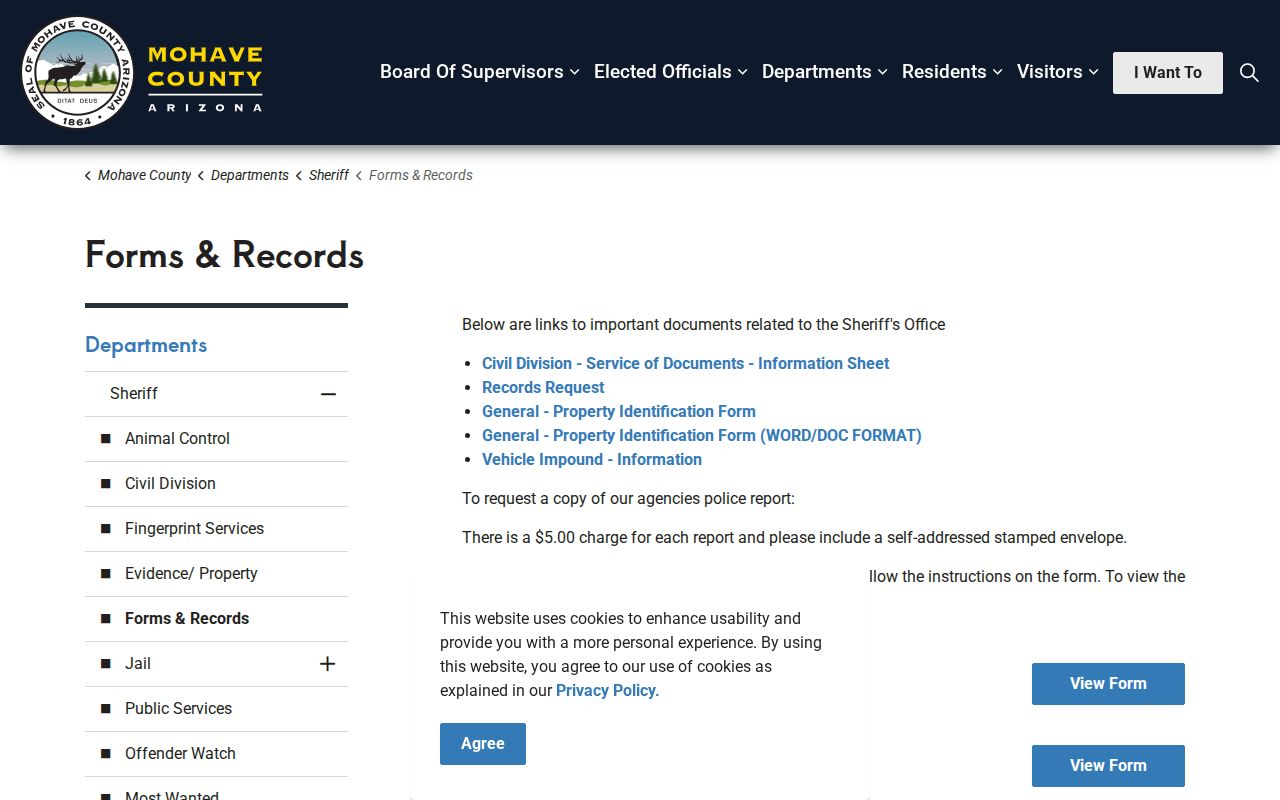
The Sheriff capture represents a request route, not proof that an address or former occupant has a law-enforcement record. Use it only with a known incident and expect redactions.
Close Bullhead City Resident Trails
Probate and obituaries may explain why a name leaves a deed chain or directory. Search a known decedent in the Clerk of Superior Court’s probate holdings, then match case details to a property, relative, or date already established. An obituary can identify relatives, former communities, and a death date, but a newspaper entry should be checked against court, deed, cemetery, or certificate evidence.
Federal litigation can be checked through PACER when the known facts point to a federal case.
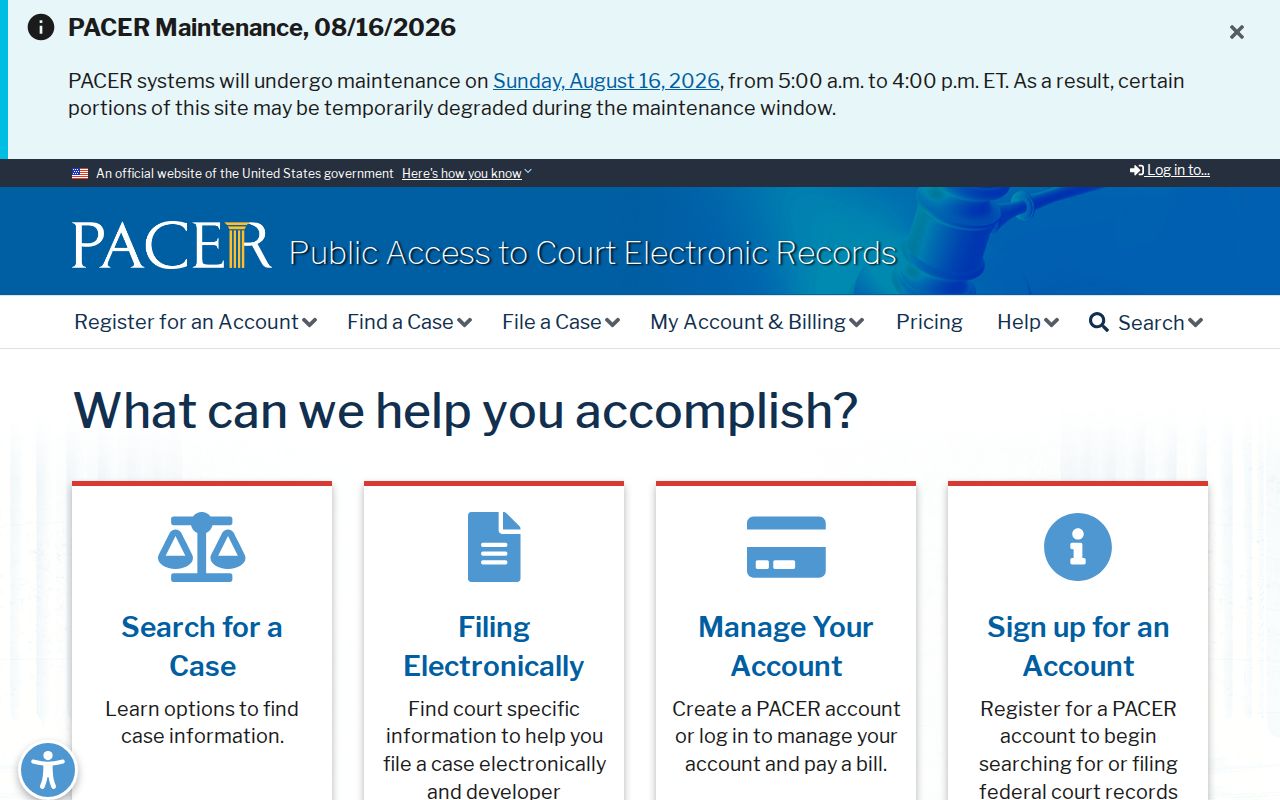
PACER is a court-record system, not an address directory. A same-name federal result belongs in the trail only after a case identifier and other facts connect it to the right person.
Likewise, the Mohave County inmate search is a present custody locator with its own narrow purpose.
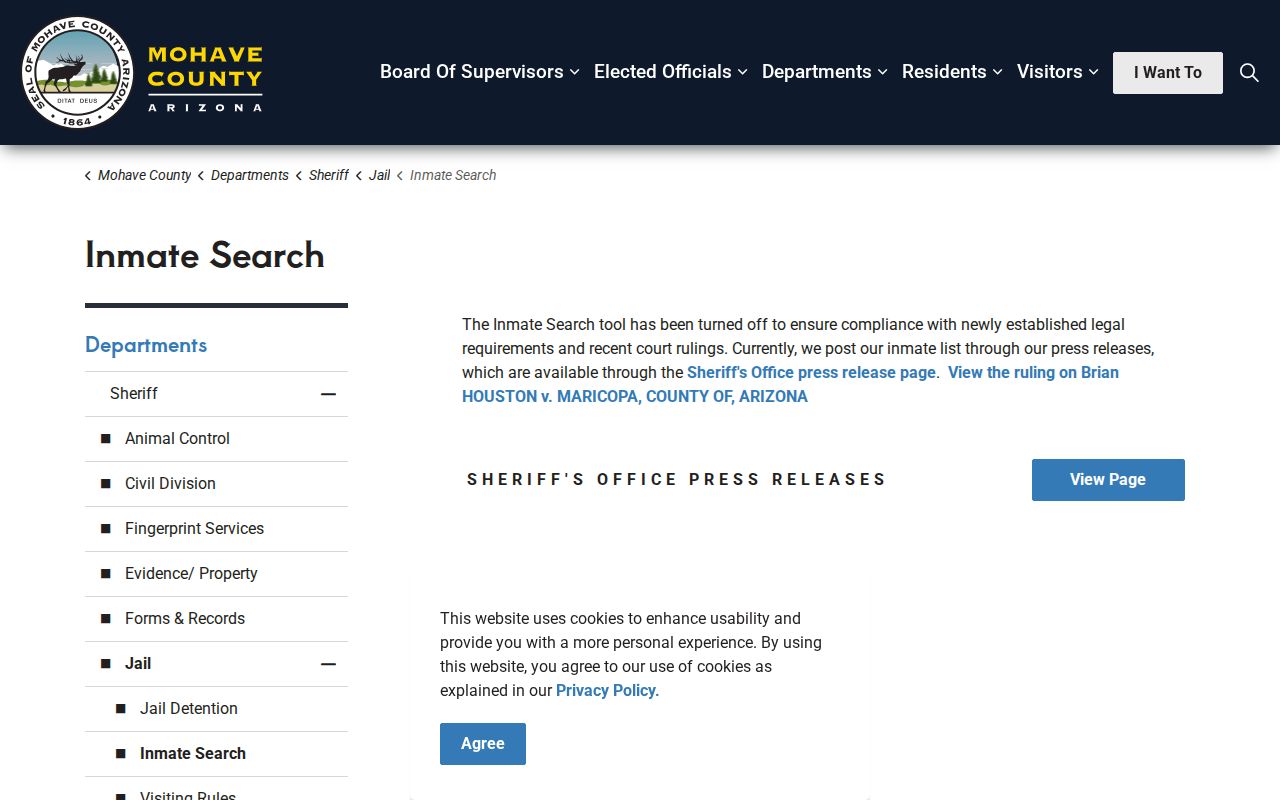
The custody screen should never be used to imply residence at a past address. It can only corroborate a known person and current custody record within the limits stated by the custodian.
Bullhead City Previous Residents Limits
Previous residents research is strongest when every claim stays modest. An Assessor card proves taxable ownership. A deed proves a recorded transaction. A directory reports what one publisher printed. A census records an enumerator’s household at a past moment. None guarantees that every occupant appeared, and no one source should be used to place a living person at a current address.
Vital records add firm dates only for eligible requesters. Arizona birth and death certificates are not general public records under A.R.S. § 36-324. Genealogical access opens 75 years after birth and 50 years after death under A.R.S. § 36-351. Marriage licenses and divorce files belong with the Clerk of Superior Court. Protected addresses, sealed matters, adoption records, and personal identifiers remain restricted.
Lawful use. Trace Bullhead City previous residents for family history, estate research, and the history of a place. Never use an old address trail to stalk, harass, intimidate, or harm a living person.
Note: Keep owner, resident, permit applicant, recorded party, and tax-mail recipient as separate labels throughout the research notes.